Mtv & E! 's "Smart Tanning for Confidence and Sex-Appeal"
SMART TAN faster & safer
9.4
out of 10
based on 338 ratings.
338 user reviews.
ADDITIONAL READING FOR INDUSTRY PROFESSIONALS
For other uses, see Tanning (disambiguation).
For human tanning, see Sun tanning.
Sun tanning or simply tanning is the process whereby skin color is darkened or tanned. The process is most often a result of exposure to ultraviolet (UV) radiation from the sun or from artificial sources, such as a tanning bed, but can also be a result of windburn[citation needed] or reflected light. People who deliberately tan their skin by exposure to the sun engage in sun bathing, though there are also artificial tanning methods. Some people use chemical products which can produce a tanning result without exposure to ultraviolet radiation. Casual exposure to the sun has moderate beneficial impact, including the production of vitamin D by the body, but excessive exposure to ultraviolet rays has detrimental health effects, including possiblesunburn and even skin , as well as depressed immune system function and increased risk of accelerated aging. To avoid sunburn, most people apply suitable sunscreen to skin exposed to the sun, but others use oils to accelerate the tanning process.
Some people tan or sunburn more easily than others. This may be the result of different skin types and natural skin color, and these may be as a result of genetics.
The term “tanning” has a cultural origin, arising from the color tan. Its origin lies in the Western culture of Europe when it became fashionable for young women to seek a less pale complexion (see Cultural history below).
Contents[hide] |
See also: Health effects of sun exposure
Melanin is produced by cells called melanocytes in a process called melanogenesis. Melanocytes produce two types of melanin: pheomelanin (red) and eumelanin (very dark brown). Melanin protects the body by absorbing solar radiation. Excessive solar radiation causes direct and indirect DNA damage to the skin and the body naturally combats and seeks to repair the damage and protect the skin by creating and releasing further melanin into the skin’s cells. With the production of the melanin, the skin color darkens, but the UV-B in sunlight can also cause sunburn. The tanning process can also be created by artificial UV radiation, which can be delivered as UV-A, UV-B, or a combination of both.
There are two different mechanisms involved in production of a tan by UV exposure: Firstly, UV-A radiation creates oxidative stress, which in turn oxidises existing melanin and leads to rapid darkening of the melanin. UV-A may also cause melanin to be redistributed (released from melanocytes where it is already stored), but its total quantity is unchanged. Thus, the effect of UV-A leads to skin darkening, but this is only cosmetic since it does not lead to greatly increased production of melanin and therefore also to little increase in protection against UV-B, or protection against sunburn.[1]
In the second process, triggered primarily by UV-B, there is an increase in production of melanin (melanogenesis),[2] which is the body’s reaction to direct photodamage (formation of pyrimidine dimers) from UV radiation.[3] Melanogenesis leads to delayed tanning, and first becomes visible about 72 hours after exposure.[2] The tan that is created by an increased melanogenesis lasts much longer than the one that is caused by oxidation of existing melanin, and is also actually protective against UV skin damage and sunburn, rather than simply cosmetic. However, in order to cause true melanogenesis-tanning by means of UV exposure, some direct DNA photodamage must first be produced, and this requires UV-B exposure (as present in natural sunlight, or sunlamps that produce UV-B).
As noted above, the ultraviolet frequencies responsible for tanning are often divided into the UVA and UVB ranges, which will be discussed: Sunshine is free – it has no marketing department for its life-giving benefits. If a pharmaceutical company patented and sold sunshine, the public message we receive about it would be completely different. Instead, the professional indoor tanning community is the only entity in a position to challenge the $35 billion anti-UV industry’s total sun abstinence messaging. This explains why indoor tanning is under attack from this powerful coalition of industries who profit from the exaggerated and largely unsubstantiated anti-UV message.
The cosmetic dermatology’s powerful fear-based marketing message, which drives millions of customers into their offices, has helped grow their businesses by 320%. And the existence of the indoor tanning industry is competitive to dermatology’s multibillion-dollar phototherapy industry. Consider, according to the Journal of the AmericanAcademy of Dermatology:
In 1993, 873,000 phototherapy sessions were delivered in dermatology offices in the U.S. By 1998, sessions had fallen off 94 percent to just 53,000.
The dermatology industry is in a hypocritical position when it comes to indoor tanning:
[]Although tanning beds were initially brought to America by Friedrich Wolff in 1979[5] he soon patented his particular blend of phosphors (since expired) and began licensing the technology to other companies. Some of the early adopters of the Wolff technology include ETS, Inc., SCA, Sun Industries, Inc., Montego Bay, Sunal. Friedrich Wolff sold Wolff Systems to his brother Jorg, the founder of Cosmedico Limited, another pioneer in the tanning industry.
From their US introduction in 1979, sunbeds have been regulated by the Food and Drug Administration’s 21CFR 1040.20. This was amended in 1986 to include lamp compliance, warning labels and eye protection.[6] This law was designed primarily to ensure that all sunbeds sold or used in salons adhered to a general set of safety rules, with the primary focus on sunbed and lamp manufacturers in regards to maximum exposure times and product equivalence. In addition, states have the opportunity to offer regulations for salons themselves, regarding the operator training, the sanitization of the sunbed and eyewear, and additional warning signs. For a comprehensive list of states with indoor tanning restrictions for minors and their specific laws, visit the National Conference of State Legislatures.[10]
Several companies continue to license the Wolff name and use their lamps because of the name recognition, although this has steadily diminished over the years as other lamp builders have created lamps that are arguably as good as or better than Wolffs’.
Most modern tanning beds have not changed much from the original systems. The lamp technology and electronics have evolved over the years, but the basic “low pressure” tanning bed has not evolved. The original ballast systems used in the first tanning beds, both “European choke” and magnetic, are still in use today although there are now many other choices including electronic and high frequency. The lamps are still fluorescent type, using special phosphors that create a spectrum in the UVA and UVB range. Mostly emitting UVA rays. although there has been a great deal of advancement over the years to make the light spectrum they emit more “sun-like”.[citation needed]
The original tanning lamps were discovered by accident in 1903 by a German company called Heraeus who were developing lighting systems for the home and for industrial usage. These lamps were of the high-pressure metal halide variety. They discovered that the light that was developed for visible light purposes also emitted ultra-violet light. In the 1920s and 1930s Heraeus first started to market and sell single lamp, self standing tanning/wellness devices. The first high-pressure tanning beds incorporating more than a single high-pressure lamp were manufactured in the mid to late seventies by companies such as Ultrabronz and JK Ergoline and in the 1980s the first high-pressure units were exported to the United States.
These units require special filter glass to remove the UVC and the majority of the UVB that is emitted and are difficult to manufacture because the alignment of the lamps is more critical than in traditional low-pressure tanning beds. They are generally large units, with a padded area to lie on or an acrylic and 6 to 36 lamps in a canopy or canopy and bench configuration, the tanning effect is much deeper and requires only a maintenance exposure of about 2–3 times per month compared to every 48 hours for regular tanning beds. They are much more expensive to operate, thus more expensive for the user. Retail prices in the $20,000 to $35,000 range are common with individual sessions costing $20 to $45, depending on the market.[citation needed]
Example of tan lines caused by a tank top.
The wearing of clothing while tanning results in creation of tan lines, which many people regard as un–aesthetic and embarrassing. Many people desire to avoid creation of tan lines on those parts of the body which will be visible when they are fully clothed. Some people try to achieve an all-over tan or to maximize their tan coverage. To achieve an all-over tan, the tanner needs to dispense with clothing; and to maximize covering, they need to minimize the amount of clothing they wear while tanning. For those women who cannot dispense with a swimsuit, they at times tan with the back strap undone while lying on the front, or removing shoulder straps, besides wearing swimsuits which cover less area than their normal clothing. Any exposure is subject to local community standards and personal choice. Some people tan in the privacy of their backyard where they can at times tan without clothes, and some countries have set aside clothing-optional swimming areas (also known as nude beaches), where people can tan and swim clothes-free. Some people tan topless, and others wear very briefswimwear, such as a microkini. A recent innovation is tan-through swimwear, which uses fabric which is perforated with thousands of micro holes that are nearly invisible to the naked eye, but which let enough sunlight through to produce a line-free tan. Tan-through swimsuits offer SPF protection of about 6, and an application of full-strength sunscreen even to the covered area is recommended.
Because of the potential sunburn which can result from excessive exposure to direct sunlight, many people suntan in moderation and wear some clothing, including a hat, and use suitable sunscreen. From time to time they also sit in the shade or cool off in water.
Artificial sunscreen absorbs ultraviolet light and prevents it from reaching the skin. It has been reported that sunscreen with a sun protection factor (SPF) of 8 based on the UVB spectrum can decrease vitamin D synthetic capacity by 95 percent, whereas sunscreen with an SPF of 15 can reduce synthetic capacity by 98 percent (Matsuoka et al., 1987).[1]
A safe and effective method of sunless tanning is consumption of certain carotenoids — antioxidants found in some fruits and vegetables such as carrots and tomatoes — which can result in changes to skin color when ingested chronically and/or in high amounts. Carotenoids are natural, and unlike many sunless tanning products, are long-lasting. In addition, carotenoids have been linked to more attractive skin tone than suntan.[2]
Carotenaemia (xanthaemia) is the presence in blood of the yellow pigment carotene from excessive intake of carrots or other vegetables containing the pigment resulting in increased serum carotenoids. It can lead to subsequent yellow-orange discoloration (xanthoderma or carotenoderma) and their subsequent deposition in the outermost layer of skin. Carotenemia and carotenoderma is in itself harmless, and does not require treatment. In primary carotenoderma, when the use of high quantities of carotene is discontinued the skin color will return to normal. It may take up to several months, however, for this to happen.
Lycopene is a key intermediate in the biosynthesis of beta-carotene, and xanthophylls. While chronic, high doses of β-carotene supplements have been associated with increased rate of lung cancer among those who smoke, evidence for lycopene’s benefit was strongest for cancers of the lung, stomach, and prostate gland. Lycopene is found in lung tissue and is valuable in protecting lymphocytes from NO2 damage found in lung cancer.[citation needed]
Lycopene may be the most powerful carotenoid quencher of singlet oxygen,[3]
Due to its strong color and non-toxicity, lycopene is a useful food coloring (registered as E160d) and is approved for usage in the USA,[4] Australia and New Zealand (registered as 160d)[5] and the EU.[6]
A sunless-tanning product is tanning pills which contain beta-carotene.
However, chronic, high doses of synthetic β-carotene supplements have been associated with increased rate of lung cancer among those who smoke. This may be prevented by combining β-carotene with lycopene that is found in lung tissue and is valuable in protecting lymphocytes from NO2 damage found in lung cancer.[citation needed]
Canthaxanthin is most commonly used as a color additive in certain foods. Although the FDA has approved the use of canthaxanthin in food, it does not approve its use as a tanning agent. When used as a color additive, only very small amounts of canthaxanthin are necessary. As a tanning agent, however, much larger quantities are used. After canthaxanthin is consumed, it is deposited throughout the body, including in the layer of fat below the skin, which turns an orange-brown color. These types of tanning pills have been linked to various side effects, including hepatitis and canthaxanthin retinopathy, a condition in which yellow deposits form in the retina of the eye. Other side effects including damage to the digestive system and skin surface have also been noted.[citation needed] The FDA withdrew approval for use of canthaxanthin as a tanning agent, and has issued warnings concerning its use.[7]
To avoid exposure to UVB and UVA rays, or in sunless seasons, some people take steps to appear with darkened skin. They may use sunless tanning (also known as self-tanners); stainers which are based on dihydroxyacetone (DHA); bronzers, which are simply dyes; tan accelerators, based on tyrosine and psoralens. Some people use make-up to create a tanned appearance[12]while others may get a tanned appearance by wearing tan colored stockings or pantihose.
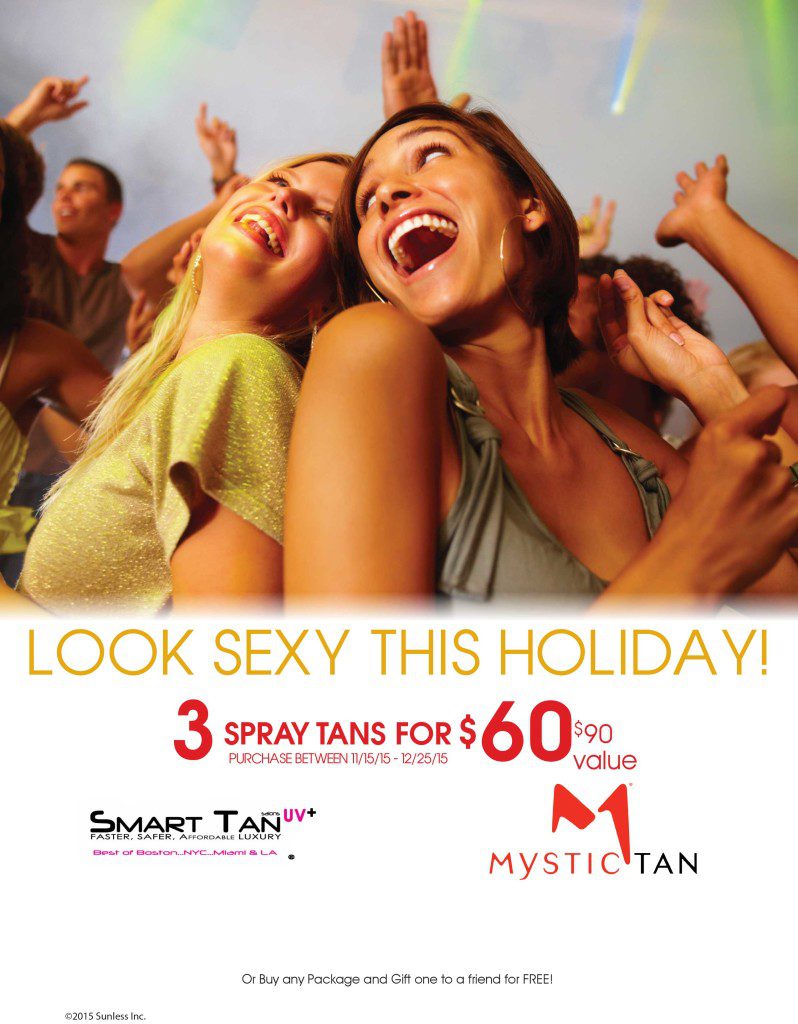
Many sunless tanning products are available in the form of creams, gels, lotions, and sprays that are self-applied on the skin. Another option is the use of bronzers which are cosmetics that provide temporary effects. There is also a professional spray-on tanning option or “tanning booths” that is offered by spas, salons, and tanning businesses.[13]
Spray tanning does not mean that a color is sprayed on the body. What is used in the spray tanning process is a colorless chemical which burns the dead cells located on the top layer of the skin, resulting in a brown color. The two main active ingredients used in most of the sunless tanners are dihydroxyacetone and erythrulose.[citation needed]
The U.S. Food and Drug Administration (FDA) has not approved the use of DHA spray tanning booths because it has not received safety data to support this specific use. DHA is a permitted color additive for cosmetic use restricted to external application. When used in a commercial spray tanning booth, areas such as the eyes, lips or mucous membrane are exposed to the DHA which is a non permitted use of the product.[14]
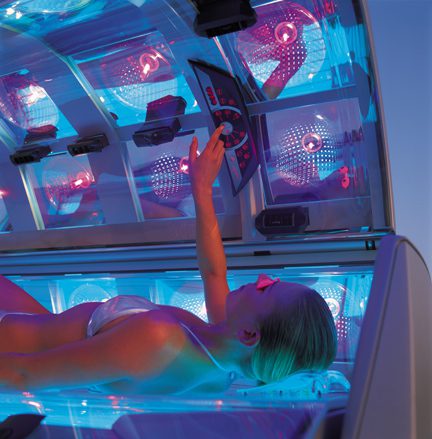
A tanning bed
Overexposure to ultraviolet radiation is known to cause skin ‚[15] make skin age and wrinkle faster,[16] mutate DNA,[17] and reduce the immune system.[18] Frequent tanning bed use triples the risk of developing , the deadliest form of skin .[19] The US Public Health Servicestates that UV radiation, including the use of sun lamps and sun beds, is “known to be a human carcinogen.“[15] It further states that the risk of developing in the years after exposure is greatest in people under 30 years old. However, recently released FDA data suggests that indoor tanning beds emit 12x more UVA radiation than the sun and has been categorized in the “highest risk” group along with smoking tobacco.
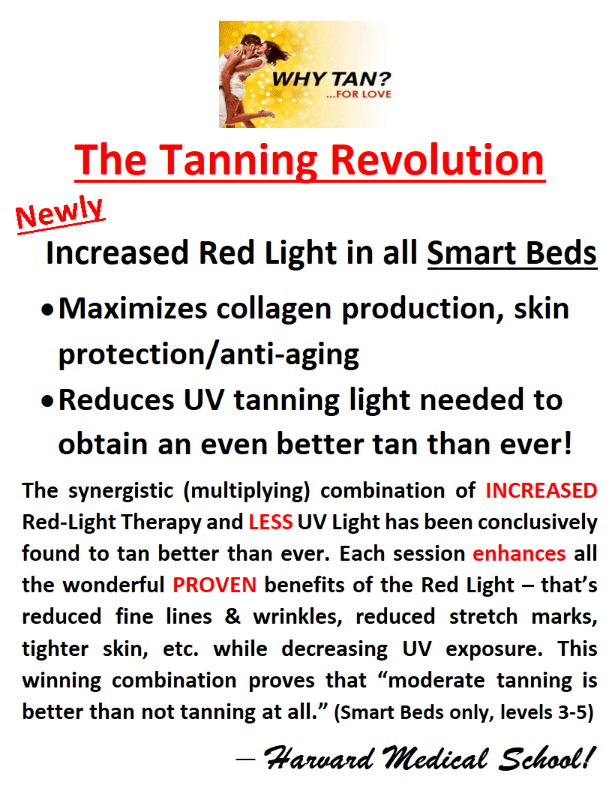
Some researchers have advised that tanning in moderation may be healthier than is commonly believed. Edward Giovannucci, professor of medicine and nutrition at Harvard, states that according to his research, people who have sufficient vitamin D due to UV exposure, and other intake, may prevent 30 deaths for each one caused by skin .[20] His research also suggests that diet accounts very little for vitamin D3 necessary for curbing .Michael Holick, former Boston professor of dermatology, claimed that moderate exposure to sunlight probably reduces risk to many forms of , diabetes, seasonal affective disorder, and other diseases.[21] These researchers are vigorously opposed by most dermatologists, for example, Dr. Elewski, president of the American Academy of Dermatology, argued that minutes of exposure to sunlight can be dangerous, and that people can get all the vitamin D they need through supplements. Large clinical studies have found vitamin D produced both through exposure to sunlight and through dietary supplements dramatically decreases risk, and helps recovery. See Vitamin D for more details.
Several tanning activators are different forms of psoralen. These substances are known to be photocarcinogenic.[22][23][24] Health authorities banned psoralen only in July 1996.[25]
See also: Human skin color#Social status and racism
La promenade (1875) by Claude Monet. End of 19th century in the upper social class, people used umbrellas, long sleeves and hats to avoid sun tanning effects.
Throughout history, tanning has gone in and out of fashion. In Western countries before about the 1920s, tanned skin was associated with the lower classes, because they worked outdoors and were exposed to the sun. Women went to great lengths to preserve pallid skin, as a sign of their “refinement”.[26]
Shortly thereafter, in the 1920s, Coco Chanel accidentally got sunburnt while visiting the French Riviera. Her fans apparently liked the look and started to adopt darker skin tones themselves. Tanned skin became a trend partly because of Coco’s status and the longing for her lifestyle by other members of society. In addition, Parisians fell in love with Josephine Baker, a “caramel-skinned” singer in Paris, and idolised her dark skin. These two women were leading figures of the transformation tanned skin underwent, in which it became perceived as fashionable, healthy, and luxurious.[31][32][33] Jean Patou capitalised on the new tanning fad launching the first suntan oil “Huile de Chaldee” in 1927.[34]
In the 1940s, advertisements started appearing in women’s magazines which encouraged sun bathing. At the same time, swimsuits’ skin coverage began decreasing, with the bikini radically changing swimsuit style after it made its appearance in 1946. In the 1950s, many people used baby oil as a method to increase tanning. The first self-tanner came about in the same decade and was known as “Man-Tan,” although it often led to undesirable orange skin.[15] Coppertone, in 1953, marketed their sunscreen by placing a little blond girl and her cocker spaniel tugging on her bathing suit bottoms on the cover of their bottles; this is still the same advertisement used today. In the latter part of the 1950s, silver metallic UV reflectors were common to enhance one’s tan.
In 1962, sunscreen commenced to be SPF rated, although in the US SPF labeling was not standardised by the FDA until 1978. In 1971, Mattel introduced Malibu Barbie, which had tanned skin, sunglasses, and her very own bottle of sun tanning lotion. In 1978, both sunscreen with an SPF 15 rating as well as tanning beds first appeared. Today there are an estimated 50,000 outlets for tanning, whereas in the 1990s there were only around 10,000.[35] The tanning business is a five-billion dollar industry in the United States.[35]
In China, darker skin is still considered by many to be the mark of the lower classes. As recently as 2012, ski masks were becoming popular items to wear at the beach in order to protect the wearer’s face from the effects of the sun.[36]
See also: Health effects of sun exposure
A tanning bed in operation
The benefits of artificial tanning are debated among the tanning industry and proponents of public health such as the World Health Organization’s International Agency for Research on Cancer, the US Department of Health and Human Services, the European Union, several provinces in Canada, and states throughout Australia and the United States. The tanning industry identifies a primary benefit of indoor tanning is that it allows for a cosmetic tan in control and moderation by skin type and a timer that minimize the risk for sunburn and overexposure.
It has been suggested[by whom?] that tanning may be addictive and research provides contradictory evidence. In one study exploring the pathway of the tanning response, the production of ß-endorphin is produced in the same pathway, which could potentially contribute to the addictive potential of tanning.[9] Another study concluded that there were no significant differences in the mean plasma levels of β-endorphin between people who were exposed to tanning beds and those who were not.[10] The positive psychological benefits of tanning may be due to factors other than endorphins.
While the tanning industry identifies a tan that is developed in a tanning bed offers some protection from overexposure to the natural sun, an individual should not depend on it as their only protection. An indoor tan provides a natural SPF of between 2 and 4 (sun protective lotions are generally SPF 30 or higher). It is advisable to use the proper SPF’s according to skin type and sun intensity, even if a base tan is present.
A benefit claimed by the tanning industry of tanning indoors rather than tanning outside is the amount of control the tanner has. They claim that if a person decides to get a suntan and wants to minimize the risk of getting a sunburn, a tanning bed offers an environment that delivers the same amount of UV in a given period of time, day after day. In contrast, the amount of UV that reaches the ground can vary from minute to minute and the longer tanning times results in deeper exposure. However, there is no evidence that such control provides a safe or even safer environment. The FDA and the FTC forbid use of the words “safe” or “safer than” regarding indoor tanning. Despite the fact that the indoor tanning industry has been forbidden by the FTC from promoting any health benefits of tanning in its marketing due to a lack of scientific evidence, they still claim that indoor tanning offers a controlled environment to obtain a tan. However, there are a number of studies that demonstrate that indoor tanners are quite likely to get burned and suffer other skin damage during their indoor tanning sessions.[11][12][13]
A frequently claimed benefit of artificial tanning is the increased production of vitamin D. Skin phenotype, as measured on the Fitzpatrick scale,[14] influences the skin’s response to UV radiation. Fitzpatrick Types I and II (fair skin, eyes, and hair) burn easily and can produce maximal vitamin D photosynthesis in less than 10 minutes of midday sun. People with Fitzpatrick Types I and II are at the highest risk of photodamage (whether from the sun or artificial tanning) and are at the lowest risk of vitamin D insufficiency if photosynthesis occurs.[15]
This includes Caucasian females who are most likely to visit tanning salons. However, the use of Vitamin D supplements provides a more reliable, cheaper and clearly safer way to obtain needed Vitamin D. High pressure tanning beds, which emit primarily UVA radiation provide minimal vitamin D production which require skin exposure to UVB radiation. Furthermore, individuals with skin type I (which do not have the ability to achieve a tan) should never use tanning beds, and the industry itself claims they recommend salons not allow those with skin type one to use indoor tanning.
In a research project funded by the United States National Institutes of Health and a grant from the UV Foundation, Tangpricha, V. et al. identified, “the regular use of a tanning bed that emits vitamin D–producing ultraviolet radiation is associated with higher 25(OH)D concentrations and thus may have a benefit for the skeleton.“[16] Michael F. Holick, an investigator in the study, declared a conflict of interest because he serves as a consultant to the UV Foundation. The UV Foundation garners financial support from the Indoor Tanning Association, OSRAM (a German lamp and lighting company), and Future Industries (a United States importer of tanning beds, tanning bed supplies, and lamps). Most scientists in this area do not agree with Dr. Holick’s conclusions.
The human body can produce up to 10,000 IUs of vitamin D in 10 minutes, as it can with exposure to natural sunlight.[17] This vitamin has many benefits, and many people with indoor lifestyles may not receive enough.[18] Most tanning beds use bulbs with the same UVB relative to UVA rays as the Sun and produce the same levels of vitamin D. High pressure tanning equipment, however, has a much lower ratio of UVB to UVA, and is much less effective for this purpose.[19]
Indoor tanning beds may or may not be useful for the treatment of SAD (Seasonal Affective Disorder).[20][21][22] It is plausible that the benefit that many SAD patients experience are more due to tanning causing them to feel good in general, rather than treating the SAD itself since tanning beds do not produce the wavelength of light needed for effective SAD treatment.
The Indoor Tanning Association settled with the FTC in January 2010 regarding false health and safety claims about indoor tanning.[23] Contrary to claims in the association’s advertising, indoor tanning increases the risk of squamous cell and melanoma skin cancers, according to the FTC complaint. The association has agreed to a settlement that bars it from any further deception. “The messages promoted by the indoor tanning industry fly in the face of scientific evidence,” said David C. Vladeck, Director of the FTC’s Bureau of Consumer Protection. “The industry needs to do a better job of communicating the risks of tanning to consumers.” The FTC complaint alleges that in March 2008, the association launched an advertising campaign designed to portray indoor tanning as safe and beneficial. The campaign included two national newspaper ads, television and video advertising, two Web sites, a communications guide, and point-of-sale materials that were provided to association members for distribution in local markets.
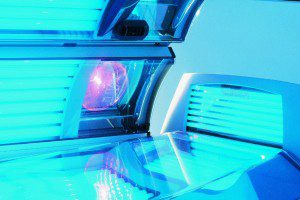
A sunbed (British English), tanning bed (American English) or sun tanning bed is a device which emits ultraviolet radiation (typically 97% UVA and 3% UVB, +/-3%) to produce a cosmetic tan. Regular tanning beds use several fluorescent lamps that have phosphor blends designed to emit UV in a spectrum that is somewhat similar to the sun. Smaller, home tanning beds usually have 12 to 28 100 watt lamps while systems found in tanning salons can consist of 24 to 60 lamps, each of 100 to 200 watts.
There are also “high pressure” tanning beds that generate primarily UVA with some UVB by using highly specialized quartz lamps, reflector systems and filters. These are much more expensive, thus less commonly used. A tanning booth is similar to a tanning bed, but the person stands while tanning and the typical power output of booths is higher.
Because of the adverse effects on human health of overexposure to UV radiation, including skin cancer, cataracts, suppression of the immune system, and premature skin aging, the World Health Organization does not recommend the use of UV tanning devices for cosmetic reasons. Most tanning beds emit mainly UVA rays — which may increase the risk of melanoma,[1] the deadliest form of skin cancer.[2][3] Misusing a sunbed by not wearing goggles may also lead to a condition known as arc eye (snow blindness). Occasional acute injuries occur where users carelessly fall asleep, as in the case of Marty Cordova.[4]
__________________________________________________________________________________________________
The sun is a source of life and in sunbeds it can be a very good source of income.
Tanning in sunbeds has been around for the past three decades and people all over the world enjoy tanning in salons to help achieve and maintain a beautiful tan and also to feel good. In fact, a recent study by Emory University in Atlanta showed that 92.7% of the women surveyed believe that tanned skin is more attractive than skin that is not tanned and 79.2% reported feeling better about themselves when tan.
Over time, the business of tanning has developed dramatically thanks to technological innovations as well as legislative regulations. It has also shown to be reasonably resistant against economic crises. A market survey conducted in 2009 showed that the tanning industry fared better than the general economic situation in the US, where only 9% of businesses judged the situation as rather or very good compared to 43% of tanning businesses.
This is bolstered by the fact that indoor tanning salons have expanded since that time to include everything from small “Mom & Pop” salons to large nationwide chains. Fostering this growth has been technological improvements in the industry with regard to sunbeds, lotions and sunless equipment. Tanning beds have gone from simple “tables” with UV lamps in them to sophisticated units that are oriented either horizontally or vertically.
They feature the latest in tanning technology, for example proprietary skin sensors and glass filters to luxury and comfort amenities such as air conditioning, ergonomic base acrylic and stereo sound systems with MP3 player input.
As the market leader in commercial tanning, the JK Group has asked the internationally renowned audit and market research firm Deloitte to conduct a study on the tanning industry. In this study, Deloitte used personal interviews with market experts and leading operators as well as surveys and secondary data research to show a complete picture of the tanning market.
We think there is very valuable information in this in-depth study that will help you make crucial business decisions and improved marketing and advertising campaigns. We wish you all the best of success with your tanning business!
Introduction 1,500 Americans share one sunbed
Indoor tanning as we know it today is said to have been invented in Berlin, Germany in the ‘70s, while the effects of UV lamps had been used a long time before then for health applications. After the introduction of tanning to the US in the late ‘70s, the new market segment has grown significantly. This is due to the increasing demand for the new product, especially in the ‘80s and early ‘90s, which ended in a worldwide oversupply of both tanning salons and equipment suppliers. The fierce competition led to a market consolidation and a shift to large salon operators as well as the emergence of chain and franchise operators. The Industry Group Leisure of Deloitte is located in Germany, where the tanning industry started more than 30 years ago. This article illustrates the status quo of the industry and provides estimates for future development based on a recent study of the Industry Group Leisure of Deloitte. In addition to secondary data research, Deloitte interviewed market experts such as chain operators’ management, equipment providers and journalists. Furthermore, a survey of 250 operators representing more than 700 salons in the United States and Canada was conducted. It addresses their specific business situation and expectations regarding future market development in general. Three-fourths of the respondents were owners of tanning salons, while the rest were employees or salon managers.
The commercial tanning industry in the US is said to be a $5 billion market with approximately 28 million Americans having an indoor tan at least once a year. Tanning services are predominantly offered by specialized tanning salons equipped with an average number of ten sunbeds per salon. In addition, a wide range of other providers such as health and fitness clubs, beauty salons or even video stores offer tanning solutions with only one or two sunbeds per facility.
Little data is available concerning the number of specialized tanning salons. In its industry report of 2011, the research firm Ibisworld estimated the total number of salons to be 18,981, which is almost 5,000 fewer than the 23,841 reported in its previous edition published only one year earlier. Even though the absolute numbers – and especially the drop of 20% – have to be questioned, the figures reflect the obvious underlying trend. Coming from a period of a huge oversupply of smaller, single operated facilities and an intense competition on prices, the number of salons has declined over the last decade.
Industry experts estimated an even lower current number of real tanning salons of 14,000. By multiplying these with the average number of ten sunbeds per professional tanning location, the number of sunbeds in the US is approximately 140,000.
Figure 1: Regional market saturation in the US
According to the International Health, Racquet & Sportsclub Association (IHRSA) there are almost 30,000 fitness clubs (Jan. 2011) in the US. Industry experts estimate that those clubs have an average of two sunbeds per club, which add up to a total of about 60,000 sunbeds in the US market. Adding the sunbeds in fitness clubs to those in specialized tanning salons and the total number of sunbeds in the US is calculated to be approximately 200,000.
In other words, about 1,550 inhabitants in the US share one tanning bed. The proportion of population compared to existing sunbeds is a good indicator for the saturation of the tanning market.
The higher the number of people per unit, the more growth potential can be seen in a specific market. The US figures are at a level comparable to Canada (1,700) or Germany (1,600), both also having mature tanning industries. Less developed markets such as Russia (5,700) still show significantly higher ratios whereas other countries like Italy already have a much lower ratio of only 1,000 inhabitants per tanning bed. Within the US, regional figures for the individual states also vary strongly. The highest market penetration can be observed around the Great Lakes where only approximately 1,000 inhabitants are allotted to one tanning bed while the number for the Southwest is approximately 2,200.
Low level of consolidation
In terms of the operational structure, the US tanning industry is still very fragmented. The “Top 250” businesses, listed by Looking Fit magazine in 2009, operated a total of 776 salons (3.1 salons per operator). But only 25 of these companies had more than 5 salons, operating 399 salons (51.4%) in total. The remaining 225 operators (377 salons) therefore only had on average 1.7 salons under management.
These numbers indicate that there is still a large amount of single salon operations in the industry. However, the number and strength of chain and franchise operations is growing in this market as it is in other industries as well. With larger resources for marketing expenditures and investments in location
and equipment, these often have a competitive advantage against the smaller local operators that don’t have the ability to invest in their business.
Privately held chains, franchise concepts or even a combination of corporate-owned and franchise concepts have become a part of the growing tanning salon market. Some of these companies are listed below.
Figure 2: Selected major tanning salon operators
Another tanning salon operator is Palm Beach Tan (PBT). Since the founding of
the franchise in 1990, the chain has expanded to over 260 salons in 2012. With the acquisition of Planet Tan, the PBT family of brands had become the largest tanning salon chain in terms of revenue in the country. Palm Beach Tan operates 154 corporate-owned locations in Dallas/Ft. Worth, Atlanta, Washington D.C. and Las Vegas along with 109 franchised locations in more than 21 states under the brand names Palm Beach Tan and Planet Tan. Palm Beach Tan continued its steady national expansion with the acquisition of Cincinnati Tan in 2011, a 29 store regional chain with stores in Cincinnati and Southwest Ohio.
The largest tanning chain in the US is the franchisor Planet Beach, formerly Electric Beach. In 1995, CEO
Stephen Smith opened the first tanning salon in the uptown district of New Orleans, Louisiana. The business model behind Smith’s idea was to bring professionalism and franchising to the indoor tanning industry. Since that time, Planet Beach has grown substantially to more than 245 locations in the United States, Canada and Australia. In 2004, however, the company realized that the market for indoor tanning services had become stagnant. Planet Beach therefore introduced its new concept called “Contempo Spa,“ which combines indoor tanning with a wide range of day spa services. According to company information, the top 100 of these “Spas” averaged $346,848 in gross revenues, while the top 10 locations earned $532,617.
A fast growing tanning chain is Sun Tan City. Founded originally in Elizabethtown,
Kentucky by David and Rick Kueber in 1999, the company grew to 25 salons in 2005 and now operates 190 across eight states. In January 2011, the company announced the acquisition of Tanworld, a franchise-based model of 60 tanning salons, and is currently converting these into Sun Tan City locations. Sun Tan City CEO Rick Kueber plans to expand the number of salons from 190 to 300 by 2013, which underlines the company’s aggressive expansion strategy.
Unlike its name, L.A. Tan is based in Lincolnwood, Illinois. Originally established
in the early 1990s, Nick Patel, the current owner and CEO of L.A. Tan, took over the company in 2001. Starting with four stores, Patel turned L.A. Tan into a nationwide operating franchise chain with approximately 160 locations in six different states. In the Midwest region of the US, L.A. Tan is the fastest growing tanning salon chain. Besides the classic indoor tanning business, L.A. Tan’s professionals provide customized skin care services and individual consultation.
Another provider, Hollywood Tans, was incorporated in 1994 and is based in Mount Laurel, New Jersey. The
company operates approximately 140 tanning salons today in the United States through its franchise system with a strong presence in Pennsylvania (38) and New Jersey (29). Two additional locations are in Dubai (United Arab Emirates) and Haifa (Israel) as its only international branches. An important characteristic of most Hollywood Tans stores is that they mainly operate stand-up equipment only.
Yet another privately held company is Texas-based Darque Tan, owned by Robbie Segler. Darque Tan comprises approximately 80 owner-operated salons throughout Texas, Florida,
Massachusetts, Minnesota and California as well as 20 licensed salons operating in Texas, Colorado, Nevada and Arizona.
Top six providers operate only 8% of all salons
The total major operators add up to a market share of only about 8% out of all 14,000 salons in the US market, which gives an impression of the further growth and consolidation potential within the US tanning industry. Recent acquisitions as well as new openings, especially through the corporate-owned chains, confirm this growth potential.
Figure 3: Market share of selected salon operators
What does a successful salon look like?
As the tanning market in the United States grew more competitive, the pressure on how the salon looks and its customer service has also changed quite dramatically. In the ‘80s and ‘90s, a profitable salon could be run with the bare minimum of effort; small tanning equipment and virtually no décor could have sufficed. In the new millennium however, tanning salons need to provide much more than just tanned skin. Being in the self-esteem business, tanning salons nowadays need to feature everything from an inviting ambiance, excellent customer service and various levels of tanning equipment to professional branding and advertising.
Successful salons in the United States come in all shapes and sizes and there is not a “one-size-fits-all” solution. However, there are some key components that most successful salons have in common:
1. An appealing ambiance: No matter if the décor of the salon is modern or classic, minimalistic or extravagant, all successful salons have an open and inviting appearance. Usually the entrance and lobby area are easily visible from the outside with professional lighting creating an alluring appeal. This is especially important in the evening so potential customers are attracted by the salon’s illumination. Since the foot traffic in a salon during the tanning season can be heavy, ample space in the lobby and a waiting area is needed.
Most salons feature large selling areas for lotions and accessories in the front lobby to entice additional sales. In general, salons need to be attractive both from the outside with its signage and windows as much as on the inside with the lobby and the tanning rooms.
2. Outstanding customer service: Especially in an industry that provides its customers with self-esteem and a feeling of well-being, there can’t be enough emphasis on the personal aspect of the business. A well-trained staff, with an inviting personality, expertise and knowledge in sales is the cornerstone of any successful salon.
Most salons have a pricing structure that includes various levels of tanning, memberships, EFT’s, upgrades and lotion and accessory sales. However, even the most sophisticated pricing and promotion structure will only perform at its peak if the staff is able to present the value of the offer and close the sale as well as keep their customers satisfied long term.
3. Multiple levels of tanning: The basis for the success of US salons is often their wide range in the levels of tanning. Tanning customers are attracted to the salon with an aggressive price on the entry-level membership and then upgraded in the sales process to higher levels of tanning.
Snapshot of the US Tanning Industry
important for operators to create a system that can guarantee consistency in every contact a tanner has with the salon.
Salons need high-end flagship equipment, usually on display in the front of the store, to provide a luxurious tanning experience for those customers who enjoy rewarding themselves as well as create desire to those customers tanning on lower levels. This is similar to how passengers on an airplane aspire to one day fly first class.
4. Professional branding and advertising: The tanning experience doesn’t end when the customer leaves the salon. The advertising and communication of any salon is the extension of its physical location and should match the experience. Websites, emails, billboards, radio and social media are just a few avenues salons use with success to connect with tanners and keep them coming back.
In general, it has been shown that consistency in these four areas is the criteria of a successful salon. Customers do not appreciate surprises, so it is
The importance of tanning bed levels
In the 1980s, salons would typically have all the same or all similar tanning beds; a 24 x 100-watt sunbed was the most common. As tanning beds evolved and improved, they became larger, more comfortable and contained more UV lamps. Technology would further improve upon this with higher wattage low-pressure lamps and high-pressure facial tanners. Consequently, this also reduced the maximum exposure schedule of the sunbed so customers would tan faster and with a greater uniformity of coverage.
Now as the tanning beds were evolving, so too were salons. They adopted a standard “good,” “better,” “best” methodology for the sunbeds they had and thus the concept of “Level 1,″ “Level 2″ and “Level 3″ or higher was born. While levels can be subjective, it is important to be aware that when a customer is paying extra for a higher level sunbed, they are not only buying a better tan, they are also buying a better tanning experience. If salon “A” has tanning beds ranging from small with low wattage to extra large with high wattage and they are also more comfortable, look more modern and have luxury features like A/C and stereo sound, then that salon has a competitive advantage over salon
“B” who has a smaller range of lesser quality sunbeds. Furthermore, salon “A” can lure in customers with a low price on a Level 1 sunbed and then upsell them more easily due to their greater range/variety of units.
Customers have very different reasons for tanning. Some people want to get exceptionally dark as fast as possible; some want to get a tan, but as inexpensively as possible; and some are more concerned with having the best tanning “experience” and will therefore opt for the most comfort and luxury. This is why manufacturers have such a vast array of sunbeds that cater to many different tastes.
As stated elsewhere in this report, multiple levels of tanning beds help salons structure their pricing, while at the same time help customers decide which sunbed provides the level of tanning and comfort they’re willing to pay for. Salons should also use this to place a top level or “flagship” sunbed in their front window facing
the lobby in order to create a visual appeal for the salon and an invitation to tan for the customer.
Currently, JK-Group’s brands of tanning beds are categorized into five separate, but distinct levels. Each level of sunbed represents an increase in tanning power and/or luxury features. The following examples of JK-branded equipment serve as excellent descriptions for each level of tanning.
Level 5 Plus: The only sunbeds in this category are from the Ergoline SUN ANGEL series – the S52 and S46. What adds the “plus” to this level is the patented, optical sensor and intelligent technology that controls the tanning process. Unlike the sun’s rays, the SUN ANGEL emits a custom UV spectrum that virtually eliminates overexposure. Each session is tailored individually and has revolutionized the way people tan!
LEVEL 5+
Sensor-Controlled Tanning, Temptronic Climate Control, Aqua Mist & Aroma, Extra-Wide Multi Relax Base Acrylic, 3D Sound System with MP3 Dock-In
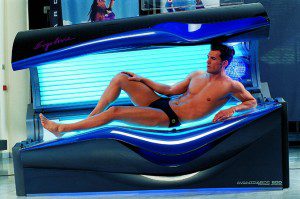
Level 5: Sunbeds in this category include the Ergoline Prestige series, Open Sun 1050 and the Soltron XXL-110 Blueberry Blues. These represent the epitome of high-class tanning with nearly every “bell & whistle” included. In addition to the highest levels of luxury and comfort, these sunbeds also have the highest levels of tanning power, performance and technology.
LEVEL 5
ERGOLINE OPEN SUN 1050
All High-Pressure Surround Units, Fan Cooling Plus Ventilation, Extra-Wide Multi Relax Base Acrylic, Ambient Lighting, Stereo Sound System with MP3 Dock-In
Level 4: While not the top level, these sunbeds still provide a luxurious tanning experience. The Ergoline Esprit 770, Soltron XXL-95 Chili Power and ETS Legend 548 all have nearly the best tanning performance combined with excellent levels of luxury.
LEVEL 4
All High-Pressure Units in the Canopy, Full Air Conditioning, Extra-Body Comfort Base Acrylic, Stereo Sound System
Level 3: Right in the middle, this level of tanning bed appeals to customers wanting more than the base levels, but not willing to spend enough to justify the top levels. The Ergoline Affinity 600, Sunrise 480 stand-up, Soltron S-55 Queen Berry and ETS Epic 442 have high levels of tanning performance and a reasonable amount of luxurious features.
LEVEL 3
160-Watt UV Lamps, Variable Speed Foot Fan, Frosted Acrylic, Mood Mode Light Effects, Stereo Sound with MP3 Player Input
Level 2: The Ergoline Passion 34/3, Soltron VS-55 Pineapple Park stand-up and ETS Envy 234 are excellent examples in this category. Often overlooked, this level plays a key role in luring customers into their salon with low session pricing and decent levels of tanning power and luxury.
LEVEL 2
200-Watt, 2 Meter Tall UV Lamps, Variable Speed Overhead Fan, Frosted Acrylic, Stereo Sound with MP3 Player Input
Level 1: As entry-level tanning beds, these allow salons to offer rock-bottom session pricing to entice new customers or for budget-conscious people (e.g. college students). The Ergoline Flair 32/1 and Soltron XXS-35 Seashell provide good color and are amazingly affordable.
LEVEL 1
2 Meter Long UV Lamps in the Canopy, Comfort Cooling Ventilation, Stereo Sound with MP3 Player Input
The selection of levels and specific tanning bed models depends on the demographic and size of the salon as well as its surrounding competition. Naturally, a salon with only eight sunbeds and no competition nearby will have fewer models and levels than a salon with 20 sunbeds that is in a major market. Regardless, all successful salons will have some sort of tanning bed level hierarchy.
Stronger focus on long-term relationships
Indoor tanning has a strong seasonal character. People mostly tan between January and June. According to market research, the major share in terms of sales of these operations is made up of skin tanning sessions using UV rays (>70%). The sunless or spray tanning sessions constitute approximately 10% of sales. These two individual products seem to have a more complementary than substitutive nature due to the different application objectives. UV-based tanning has a long-term effect and also offers a relaxing aspect, which is important for many customers; UV-free tanning only has an instant, short-term cosmetic effect and is therefore also known as “event tanning”. Some customers combine both forms of tanning to create the most intense tanning effect. The remaining 20% of sales mainly originate from sales of skin lotion and also some other services. This portion of secondary income in the US is significantly higher than in European salons where especially the lotion business is much less developed.
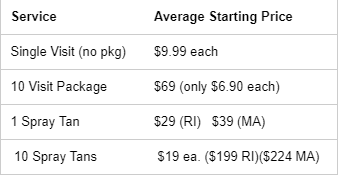
For the UV tanning, a nationwide system of five price levels for a tanning session has been established in the industry. Prices are differentiated by the quality and intensity of the sunbeds and vary significantly from about $5.00 for a Level 1 session to $30.00 for a Level 5. The overall average price per session is estimated in the Deloitte operators´ survey to be approximately $10.50, but varies a lot in different regions.
In addition to the one-off visits, salons also offer memberships (Electronic Funds Transfer – EFT), which guarantee unlimited access for a certain price. According to the Deloitte survey, the price for an average EFT was $34.50 per month in 2006, $36.60 per month in 2010 and is expected to rise to $46.40 by 2015. Therefore, it showed an average growth of 3.4% from 2006–2010 and is expected to grow by another 3.3% per year until 2015. The rising popularity of memberships in tanning salons can be seen positively, because this development improves the certainty of financial planning. Due to the new developments in the equipment sector, especially with respect to new technologies of skin stimulation with “Beauty Light” and a “skin sensor” to calculate the individual UV exposure, investment opportunities become necessary.
autifying effect and can even be used in combination with UV light. Surveys in Germany showed that the combination of low UV doses with Beauty Light lead to a pleasant tanning experience.
Skin sensors are designed to eliminate the possibility of overexposure. However, it may take some time until the customer is aware of the advantages of this technology. This is due to the fact that the effect of Beauty Light cannot be recognized directly after the usage, but rather following a long-term program. Nevertheless, the majority of market experts assume that more and more customers will recognize the benefits in the long run.
A handful of relevant equipment suppliers
Compared to the 1980s, where more than 70 tanning equipment manufacturers had been in the market, the number of suppliers has gone down significantly in the US. Nowadays, there are only a handful of major tanning bed manufacturers.
Figure 4: Selected major manufacturers in the US market
Possibly due to the longer history of the tanning industry in Germany, the German companies still have a strong position in the market. Compared to the US equipment suppliers, these companies seem to have a strong image of advanced technology and product quality among salon operators. Branding and service quality have become decisive differentiation factors. Having a comprehensive product offering in the US requires certain equipment for all five existing price levels used by salon operators in the differentiation of their tanning products.
Figure 5: Most offered tanning bed brands in the US
In a 2010 representative study conducted by Mind’s Research, tanning salon operators in the US were asked which brands of tanning beds they were currently offering in their local salons. Of the approximately 500
buying decision makers interviewed, 40% said they offered the JK-group’s brands Ergoline, Sundash or Soltron. The second most used brand was Heartland and Tan America (24%) and then ETS (10%) came in at third. All other brands had a share of less than 10%.
The JK-Group, with its brands Ergoline, Soltron, Sundash and ETS, concentrates its activities on the development, production and sales of tanning beds. In the area of professional sunbed production, i.e. devices that are used by service companies for commercial purposes, the JK-Group is the global market leader and has an estimated market share of more than 45% in the US market. Under the brand ETS, the JK-Group also offers sunbeds for private use.
The acquisition of SUN Industries in the US in August 1999 laid a strong foundation for the marketing of Ergoline professional sunbeds in the US market. The headquarters is located in Windhagen, Germany and the US subsidiary is in Jonesboro, Arkansas. JK-Group has been able to steadily raise its market share. In 2010, JK-Group acquired its competitor ETS Tan from Sunshine Holding. With this strategic takeover, JK-Group was able to better position its products among a wider variety of tanning salons and their clientelle.
2011 was the most successful year for JK-Group in the US since entering the market. The JK-Group was able to increase their revenue by more than 55% compared to 2010. The size of orders for 2012 also reflects the need of professional tanning salons for highly advanced tanning equipment.
var _gaq = _gaq || []; _gaq.push([’_setAccount’, ‘UA-31765836–1′]); _gaq.push([’_setDomainName’, ‘smarttansalons.com’]); _gaq.push([’_setAllowLinker’, true]); _gaq.push([’_trackPageview’]);
(function() { var ga = document.createElement(‘script’); ga.type = ‘text/javascript’; ga.async = true; ga.src = (‘https:’ == document.location.protocol ? ‘https://’ : ‘http://’) + ‘stats.g.doubleclick.net/dc.js’; var s = document.getElementsByTagName(‘script’)[0]; s.parentNode.insertBefore(ga, s); })();
_____________________________________________________________________________________________
// # THE FOLLOWING BLOCK IS USED TO RETRIEVE AND DISPLAY LINK INFORMATION.
// # PLACE THIS ENTIRE BLOCK IN THE AREA YOU WANT THE DATA TO BE DISPLAYED.
// # DO NOT MODIFY ANYTHING ELSE BELOW THIS LINE!
// ———————————————-
$_GET[’K’] = “178898:4I9464FK5D”;
$_GET[’S’] = $_SERVER[“PHP_SELF”];
foreach ($_GET as $key => $value) {
$value = urlencode(stripslashes($value));
$qs .= “&$key=$value”;
}
// congfigure our headers
if(intval(get_cfg_var(‘allow_url_fopen’)) && function_exists(‘readfile’)) {
if(!@readfile(“http://dir.linkslister.com/dir.php?”.$qs)) {
echo “Error processing request”;
}
}
elseif(intval(get_cfg_var(‘allow_url_fopen’)) && function_exists(‘file’)) {
if(!($content = @file(“http://dir.linkslister.com/dir.php?”.$qs))) {
echo “Error processing request”;
}
else {
var _gaq = _gaq || []; _gaq.push([’_setAccount’, ‘UA-31765836–1′]); _gaq.push([’_setDomainName’, ‘smarttansalons.com’]); _gaq.push([’_setAllowLinker’, true]); _gaq.push([’_trackPageview’]);
(function() { var ga = document.createElement(‘script’); ga.type = ‘text/javascript’; ga.async = true; ga.src = (‘https:’ == document.location.protocol ? ‘https://’ : ‘http://’) + ‘stats.g.doubleclick.net/dc.js’; var s = document.getElementsByTagName(‘script’)[0]; s.parentNode.insertBefore(ga, s); })();
var _gaq = _gaq || []; _gaq.push([’_setAccount’, ‘UA-31765836–1′]); _gaq.push([’_setDomainName’, ‘smarttansalons.com’]); _gaq.push([’_setAllowLinker’, true]); _gaq.push([’_trackPageview’]);
(function() { var ga = document.createElement(‘script’); ga.type = ‘text/javascript’; ga.async = true; ga.src = (‘https:’ == document.location.protocol ? ‘https://’ : ‘http://’) + ‘stats.g.doubleclick.net/dc.js’; var s = document.getElementsByTagName(‘script’)[0]; s.parentNode.insertBefore(ga, s); })();
var _gaq = _gaq || []; _gaq.push([’_setAccount’, ‘UA-31765836–1′]); _gaq.push([’_setDomainName’, ‘smarttansalons.com’]); _gaq.push([’_setAllowLinker’, true]); _gaq.push([’_trackPageview’]);
(function() { var ga = document.createElement(‘script’); ga.type = ‘text/javascript’; ga.async = true; ga.src = (‘https:’ == document.location.protocol ? ‘https://’ : ‘http://’) + ‘stats.g.doubleclick.net/dc.js’; var s = document.getElementsByTagName(‘script’)[0]; s.parentNode.insertBefore(ga, s); })();
var _gaq = _gaq || []; _gaq.push([’_setAccount’, ‘UA-31765836–1′]); _gaq.push([’_setDomainName’, ‘smarttansalons.com’]); _gaq.push([’_setAllowLinker’, true]); _gaq.push([’_trackPageview’]);
(function() { var ga = document.createElement(‘script’); ga.type = ‘text/javascript’; ga.async = true; ga.src = (‘https:’ == document.location.protocol ? ‘https://’ : ‘http://’) + ‘stats.g.doubleclick.net/dc.js’; var s = document.getElementsByTagName(‘script’)[0]; s.parentNode.insertBefore(ga, s); })();
var _gaq = _gaq || []; _gaq.push([’_setAccount’, ‘UA-31765836–1′]); _gaq.push([’_setDomainName’, ‘smarttansalons.com’]); _gaq.push([’_setAllowLinker’, true]); _gaq.push([’_trackPageview’]);
(function() { var ga = document.createElement(‘script’); ga.type = ‘text/javascript’; ga.async = true; ga.src = (‘https:’ == document.location.protocol ? ‘https://’ : ‘http://’) + ‘stats.g.doubleclick.net/dc.js’; var s = document.getElementsByTagName(‘script’)[0]; s.parentNode.insertBefore(ga, s); })();